


There's a building tension. Apparent is the frosty air coming from my rivals as they perform the "pre-race" jiggle on the start line.
A quick flick of the hips.
I'm lined up for my local weekly parkrun event and I'm serious. It's almost time...
Hold on. I have to sort my device. The same goes for the guy beside me.
The person in the line expresses impatience. I refuse to go until… there! Connection established, I'm off.
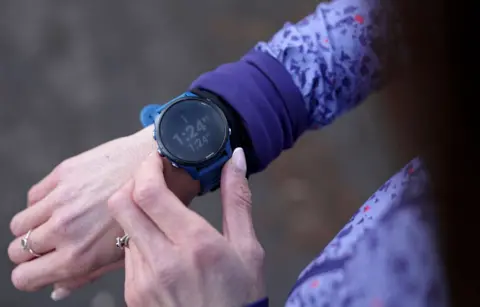
During the scramble, it's difficult to find a arm without a fitness tracker on it. And this isn't only us participants who rely on them.
This is a booming, multi-billion pound industry. Brands like Apple Watch dominate, featuring an wide range of diverse devices to fit a variety of lifestyles. According to how advanced the model you go for, prices can vary between a hundred pounds to thousands of pounds.
"It drives me insane, I'm unable to stop checking."
"It comforts me… It feels like a companion guiding me."
"I wish it wouldn't say I've had a poor sleep."
A handful of the reactions I've had from other device users when I question what they their opinion is on theirs.
The Data Dilemma
My current opinion on mine? Currently, frustrating. It's reporting I'm off pace, leading me to doubt whether the overhead branches I'm running below are blocking my location tracking.
A vast number of us strap these little devices onto our wrists and wear them 24/7, ostensibly at ease with the fact they're constantly monitoring us.
Long past are the days when we relied on them only to give us an idea of our step count. Today, they can measure our nightly rest, heart rate, glucose levels, our VO2 max.
It's difficult to find a physical metric they fail to monitor.
But can they do what they say they do? And are the statistics we analyse a faithful picture of our actual health? Do they boost our mental and physical wellbeing, or do the plethora of readings and cheerleading alerts just contribute to our daily stresses?

A Complicated Bond
"I do get a a little obsessed with mine," one user confesses.
While she values how her device records her exercise, she finds some of its other features "excessive" at times - a feeling that became apparent during a pregnancy.
Prior to discovering she could adjust the settings, her smartwatch repeatedly informed her she was being insufficiently productive enough. In a new phase, the watch frequently reports her she's had a bad night's sleep.
"I am caring for a infant, I don't need to be told my sleep was poor," she says. "I'm acutely aware only too well."
Why doesn't she just stop wearing it?
"I could, perhaps, but I've got this complicated dynamic with it," she says. "I value it for its exercise data, I just wonder whether all the other things it can now do is perhaps overkill for me."
How Do They Work?
Every device of smartwatch has its own unique way of measuring your health metrics and analysing your data, but the vast bulk use detectors on the back of the watch.
They commonly shine tiny, coloured LED lights onto your arm which can detect capillary action, identifying your heartbeat. Higher-end devices analyse changes in the skin conductance that flows through the skin to gauge your stress levels.
Expert Perspectives
A data scientist says that overall for smartwatches, it's a "fine balance" - while the ever-evolving tech could actually prevent illness, "identifying issues before we show symptoms", it could also turn us watch wearers into the "concerned but fine".
He points out that the most advanced wearables can conduct tests like heart rhythm analysis, which continuously monitor how stable the heart is. They can notify if someone is experiencing atrial fibrillation (AF), where there is irregular electrical activity in the heart causing an irregular heartbeat.
This does not necessarily indicate someone is on the verge of a heart attack, but it can give an advance notice they might be more at risk of a stroke in the long term.
But how to interpret these numbers is complex. The expert concerns that as additional features are introduced, people may not be able to fully contextualise their data.
"I remain sceptical that the ability to monitor so many metrics is such a good idea," he says.
A professor specialising in wearable tech echoes this sentiment. A study into the influence of wearable tech on a specific group of cardiovascular patients suggested a significant portion of those who were given devices to monitor their cardiac function experienced heightened worry and were "had a higher tendency to use doctor's time".
She observed a cycle with her patients - they spotted a worrying figure on their watch. They grew concerned. Their heart rate increased. They got increasingly anxious. They looked a second time, and their heart rate increased again.
"Upon viewing numbers about ourselves that we can't properly interpret then, naturally, we are going to seek clarification," the psychologist says. "We check, we check again - it becomes a feedback loop."


